Buy xmoviesforyou.eu ?
We are moving the project
xmoviesforyou.eu .
Are you interested in purchasing the domain
xmoviesforyou.eu ?
domain@kv-gmbh.de · 0541-91531010
Buy xmoviesforyou.eu ?
What is the difference between paper chromatography and gas chromatography?
Paper chromatography involves the separation of compounds based on their affinity to the stationary phase (paper), while gas chromatography separates compounds based on their volatility and interaction with the mobile phase (gas). In paper chromatography, the mobile phase is a liquid solvent, whereas in gas chromatography, the mobile phase is a gas. Gas chromatography is typically more sensitive and provides better resolution compared to paper chromatography, making it more suitable for analyzing complex mixtures of compounds. **
What happens during chromatography?
During chromatography, a mixture of substances is separated into its individual components based on their different affinities for a stationary phase and a mobile phase. The sample is applied to the stationary phase, and the mobile phase is passed through the stationary phase. As the mobile phase moves through the stationary phase, the components of the mixture will interact differently with the stationary phase, causing them to separate and move at different rates. This results in the components being eluted from the column at different times, allowing for their individual identification and quantification. **

Similar search terms for Chromatography
Top-Angebote
Products related to Chromatography:
-
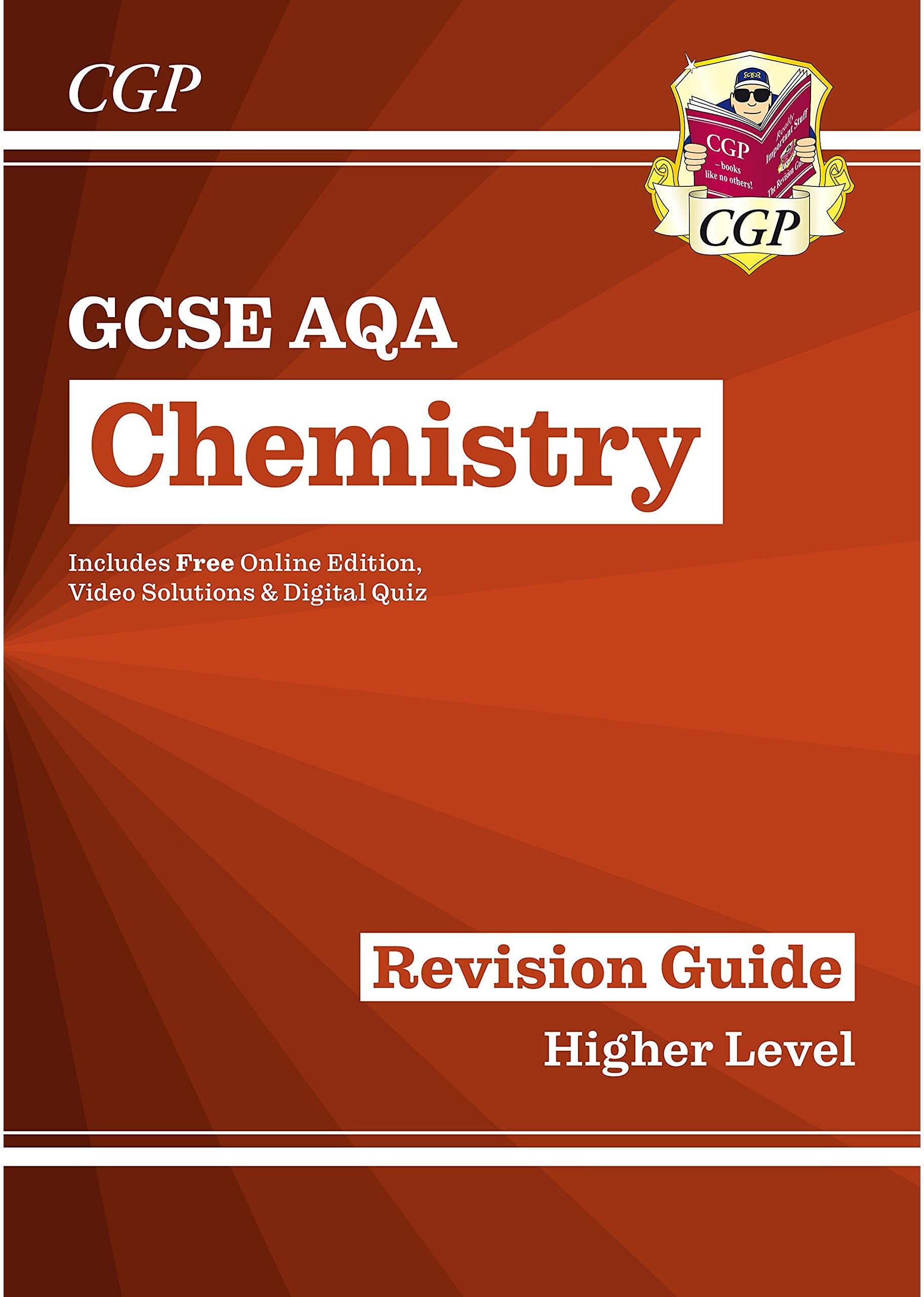
CGP Books New GCSE Biology AQA Revision Guide & Chemistry, Physics Higher includes Online Edition 9-1 Videos & Quizzes Collection 3 Books SetNew GCSE Biology AQA Revision Guide & Chemistry, Physics Higher includes Online Edition 9-1 Videos & Quizzes Collection 3 Books Set: New GCSE Biology AQA Revision Guide - Higher includes Online Edition 9-1, Videos & Quizzes: This superb Revision Guide is the perfect companion to Grade 9-1 AQA GCSE Biology (Higher level). The entire course is explained clearly and concisely, with brilliant coverage of the required practicals, maths skills and Working Scientifically, all in CGP's bold 'no-nonsense' style. New GCSE Chemistry AQA Revision Guide - Higher includes Online Edition 9-1, Videos & Quizzes: Each page is rounded off with practice questions to help cement what students have learned, with answers at the back of the book. QR codes throughout give quick and easy access to worked video solutions from our in-house experts, plus an unbeatable online Knowledge Retrieval quiz - designed to be played again and again to make all those facts stick. New GCSE Physics AQA Revision Guide - Higher includes Online Edition 9-1, Videos & Quizzes: We've even thrown in a heap of info on "What to Expect in the Exams" available to view online. Redeem the code inside the book for a free Online Edition to read on your PC, Mac or tablet - you'll have temporary access via 'My Online Products' on the CGP website from the moment you place your order. When the book arrives, just use the unique code printed inside the cover to gain full access. For the perfect revision combo, check out our matching AQA GCSE Chemistry18,99 £*Shipping: 2,99 £Secure redirect to the provider



-
Is there a difference between chromatography and thin layer chromatography of amino acids?
Yes, there is a difference between chromatography and thin layer chromatography (TLC) of amino acids. Chromatography is a general term for a technique used to separate and analyze mixtures, while TLC is a specific type of chromatography that uses a thin layer of adsorbent material on a flat support to separate compounds. In the case of amino acids, both techniques can be used to separate and analyze the different amino acids present in a mixture, but TLC is a quicker and simpler method that is often used for preliminary analysis or for educational purposes. Traditional chromatography methods, such as high-performance liquid chromatography (HPLC), may offer higher resolution and sensitivity for more detailed analysis of amino acids. **
-
What is paper chromatography in chemistry?
Paper chromatography is a technique used in chemistry to separate and analyze mixtures of substances. It involves placing a small spot of the mixture on a strip of paper and then allowing a solvent to move up the paper through capillary action. As the solvent moves, it carries the different components of the mixture at different rates, causing them to separate based on their affinity for the paper and the solvent. This technique is commonly used in the identification of unknown substances and in the analysis of complex mixtures. **
-
What is the principle of chromatography and can you give an example of different chromatography methods?
Chromatography is a technique used to separate and analyze complex mixtures based on the differential interactions between the components of the mixture and a stationary phase. The principle of chromatography involves the sample being dissolved in a mobile phase and passed through a stationary phase, where the components of the sample interact differently with the stationary phase, causing them to separate. There are several types of chromatography methods, including gas chromatography (GC), liquid chromatography (LC), and high-performance liquid chromatography (HPLC). In gas chromatography, the mobile phase is a gas, while in liquid chromatography, the mobile phase is a liquid. High-performance liquid chromatography is a more advanced form of liquid chromatography that uses high pressure to separate components more efficiently. **
-
What is the principle of chromatography and can you provide an example of different chromatography methods?
Chromatography is a technique used to separate and analyze complex mixtures based on the differential interactions between the components of the mixture and a stationary phase. The principle of chromatography involves the sample being dissolved in a mobile phase and passed through a stationary phase. The components of the sample interact differently with the stationary phase, causing them to separate based on their affinity for the stationary phase. There are various types of chromatography methods, including gas chromatography (GC), liquid chromatography (LC), and high-performance liquid chromatography (HPLC). In gas chromatography, the mobile phase is a gas, while in liquid chromatography, the mobile phase is a liquid. HPLC is a more advanced form of liquid chromatography that uses high pressure to separate components more efficiently. **
How can one explain chromatography in kindergarten?
Chromatography can be explained in kindergarten by using simple language and visuals. One way to explain it is by comparing it to how colors separate when they mix in water. Children can be shown how different colors in markers or food coloring separate and spread out on a paper strip when placed in water. This can help them understand that chromatography is a process that separates different colors or substances based on how fast they move through a material. Overall, using hands-on activities and simple explanations can make chromatography understandable and engaging for kindergarteners. **
How does the chromatography of leaf pigments work?
Chromatography of leaf pigments works by separating the different pigments present in a leaf based on their solubility and molecular size. A small piece of leaf is crushed and placed on a chromatography paper, which is then submerged in a solvent. As the solvent moves up the paper, it carries the pigments along with it at different rates, causing the pigments to separate into distinct bands. This separation occurs because each pigment interacts differently with the solvent and the paper, allowing for the identification and analysis of the different pigments present in the leaf. **
Top-Angebote
Products related to Chromatography:
-
AUTODESK MEDIA & ENTERTAINMENT COLLECTION 2025 - MACAUTODESK MEDIA & ENTERTAINMENT COLLECTION LICENSE Original and guaranteed by Nextdigitalkey.com What is the Media & Entertainment Collection? The Media & Entertainment Collection includes all of the tools you need to build a powerful and scalable 3D animation pipeline for complex simulations, effects, and rendering. From detailed battle sequences to hyperrealistic creatures, render your toughest projects with Arnold Create complex effects including explosions, fire, sand, and snow with Bifrost for Maya Empower artists with a choice of tools to produce beautiful, film-quality work every time How the collection helps your business Rendering power: Scale up your ability to output more, high-quality renders with 5 Arnold licenses. Scalable simulation: Create sophisticated effects at scale with the ability to run Bifrost on up to 15 machines. Access to creative tools: Equip artists with a broad range of 3D tools at every stage of production. Hiring flexibility: Don’t let your pipeline and tools limit your ability to hire the best artist for the job. What’s included in the AUTODESK MEDIA & ENTERTAINMENT COLLECTION 3ds Max Arnold Rendering (Autodesk Rendering) Character Generator Maya Motion Builder Mudbox ReCap Pro SketchBook. LANGUAGE: MULTI-LANGUAGE NUMBER OF DEVICES: 1 OPERATING SYSTEM: WINDOWS / MAC LICENSE DURATION: PERPETUAL (No expiry) WHAT DO I RECEIVE WHEN I PURCHASE? By purchasing this product, you will receive the digital software to download and install, the product key for activation, and all instructions for a proper installation. DO I DOWNLOAD THE PRODUCT FROM THE OFFICIAL WEBSITE? Certainly, the product download takes place from the official website, no external links are used, only official links. HOW DO LICENSES HAVE A LOW PRICE? they are used and disused retail licenses from the previous owner in accordance with ECJ C-128/2011 ruling, it is possible to purchase them from us at the best price on the market. Our licenses are digitally delivered via email within a few minutes of payment, they are digital ESD licenses, and all product keys are original and can be reinstalled on the same device. ARE YOU AFRAID YOU WON’T BE ABLE TO INSTALL IT? No problem! We provide direct assistance with remote support available to you 24/7, even on holidays.449,95 £*Shipping: 0,00 £Secure redirect to the provider
-
Autodesk Media & Entertainment Collection - 1 Year (2027)NOTE: This license key is for an educational version of the software, offering all the features and functionality of the commercial version. There is no indication of the educational version in printed output, nor is there a watermark.Product details✓ Genuine license key for an Media & Entertainment Collection subscription✓ Official download of the software from Autodesk website✓ Free technical support for installation and activationSafe Payment and Buyer ProtectionYour order is protected by Trusted Shops Buyer Protection for up to €2,500, plus we offer a 30-day money-back guarantee.All transactions are secured with SSL encryption. We accept payments via Stripe, Apple Pay, Google Pay, and other trusted methods to ensure a safe and smooth checkout.How to Buy, Download, and Activate Media & Entertainment Collection Buy a license key – Purchase collection at a discounted price from PrimeLicense and receive your product key via email, along with step-by-step installation instructions. Download & install software – Follow the provided instructions to download Plant 3D from the official Autodesk website and install it. Activate software – Use your purchased license key to activate the software and start designing intelligent piping and instrumentation diagrams with professional-grade tools. Autodesk Media & Entertainment Collection software - features and functionalityAutodesk Media & Entertainment Collection is a comprehensive suite of professional tools for digital content creation in animation, visual effects and game development. This collection offers everything you need to model, animate, create special effects, light and render projects, from the initial draft to the final product.Applications included: Maya: Maya is a leading software for creating virtual worlds, realistic characters and complex animation effects. It is widely used in the film, TV and video game industries. 3ds Max: 3ds Max offers powerful tools for modelling, animation and rendering of 3D environments, products and characters. It is particularly popular for the creation of video game assets and architectural visualisations. Golaem: a Maya plugin for simulating realistic digital crowds, widely used in film, TV, and games for large-scale character animation. Mudbox: Mudbox is a 3D digital sculpting and painting tool that allows you to create high-resolution models and textures with an intuitive interface. MotionBuilder: MotionBuilder specialises in creating and modifying complex character animations with a focus on motion capture and real-time animation. Arnold: Arnold is an advanced rendering engine for producing high-quality photorealistic images. The collection includes 5 licences of Arnold to expand your studio's rendering capabilities. Arnold Bifrost: Bifrost is a visual programming environment for creating complex effects and simulations such as fire, fluids and particles. The collection allows Bifrost to be run on up to 15 machines. RECAP Pro + RECAP Photo: ReCap Pro...154,90 £*Shipping: 0,00 £Secure redirect to the provider
-
CGP Books New GCSE Biology AQA Revision Guide & Chemistry, Physics Higher includes Online Edition 9-1 Videos & Quizzes Collection 3 Books SetNew GCSE Biology AQA Revision Guide & Chemistry, Physics Higher includes Online Edition 9-1 Videos & Quizzes Collection 3 Books Set: New GCSE Biology AQA Revision Guide - Higher includes Online Edition 9-1, Videos & Quizzes: This superb Revision Guide is the perfect companion to Grade 9-1 AQA GCSE Biology (Higher level). The entire course is explained clearly and concisely, with brilliant coverage of the required practicals, maths skills and Working Scientifically, all in CGP's bold 'no-nonsense' style. New GCSE Chemistry AQA Revision Guide - Higher includes Online Edition 9-1, Videos & Quizzes: Each page is rounded off with practice questions to help cement what students have learned, with answers at the back of the book. QR codes throughout give quick and easy access to worked video solutions from our in-house experts, plus an unbeatable online Knowledge Retrieval quiz - designed to be played again and again to make all those facts stick. New GCSE Physics AQA Revision Guide - Higher includes Online Edition 9-1, Videos & Quizzes: We've even thrown in a heap of info on "What to Expect in the Exams" available to view online. Redeem the code inside the book for a free Online Edition to read on your PC, Mac or tablet - you'll have temporary access via 'My Online Products' on the CGP website from the moment you place your order. When the book arrives, just use the unique code printed inside the cover to gain full access. For the perfect revision combo, check out our matching AQA GCSE Chemistry18,99 £*Shipping: 2,99 £Secure redirect to the provider
-
What is the difference between paper chromatography and gas chromatography?
Paper chromatography involves the separation of compounds based on their affinity to the stationary phase (paper), while gas chromatography separates compounds based on their volatility and interaction with the mobile phase (gas). In paper chromatography, the mobile phase is a liquid solvent, whereas in gas chromatography, the mobile phase is a gas. Gas chromatography is typically more sensitive and provides better resolution compared to paper chromatography, making it more suitable for analyzing complex mixtures of compounds. **
-
What happens during chromatography?
During chromatography, a mixture of substances is separated into its individual components based on their different affinities for a stationary phase and a mobile phase. The sample is applied to the stationary phase, and the mobile phase is passed through the stationary phase. As the mobile phase moves through the stationary phase, the components of the mixture will interact differently with the stationary phase, causing them to separate and move at different rates. This results in the components being eluted from the column at different times, allowing for their individual identification and quantification. **
-
Is there a difference between chromatography and thin layer chromatography of amino acids?
Yes, there is a difference between chromatography and thin layer chromatography (TLC) of amino acids. Chromatography is a general term for a technique used to separate and analyze mixtures, while TLC is a specific type of chromatography that uses a thin layer of adsorbent material on a flat support to separate compounds. In the case of amino acids, both techniques can be used to separate and analyze the different amino acids present in a mixture, but TLC is a quicker and simpler method that is often used for preliminary analysis or for educational purposes. Traditional chromatography methods, such as high-performance liquid chromatography (HPLC), may offer higher resolution and sensitivity for more detailed analysis of amino acids. **
-
What is paper chromatography in chemistry?
Paper chromatography is a technique used in chemistry to separate and analyze mixtures of substances. It involves placing a small spot of the mixture on a strip of paper and then allowing a solvent to move up the paper through capillary action. As the solvent moves, it carries the different components of the mixture at different rates, causing them to separate based on their affinity for the paper and the solvent. This technique is commonly used in the identification of unknown substances and in the analysis of complex mixtures. **
Similar search terms for Chromatography
-
AUTODESK MEDIA & ENTERTAINMENT COLLECTION 2024 - MACAUTODESK MEDIA & ENTERTAINMENT COLLECTION LICENSE Original and guaranteed by Nextdigitalkey.com What is the Media & Entertainment Collection? The Media & Entertainment Collection includes all of the tools you need to build a powerful and scalable 3D animation pipeline for complex simulations, effects, and rendering. From detailed battle sequences to hyperrealistic creatures, render your toughest projects with Arnold Create complex effects including explosions, fire, sand, and snow with Bifrost for Maya Empower artists with a choice of tools to produce beautiful, film-quality work every time How the collection helps your business Rendering power: Scale up your ability to output more, high-quality renders with 5 Arnold licenses. Scalable simulation: Create sophisticated effects at scale with the ability to run Bifrost on up to 15 machines. Access to creative tools: Equip artists with a broad range of 3D tools at every stage of production. Hiring flexibility: Don’t let your pipeline and tools limit your ability to hire the best artist for the job. What’s included in the AUTODESK MEDIA & ENTERTAINMENT COLLECTION 3ds Max Arnold Rendering (Autodesk Rendering) Character Generator Maya Motion Builder Mudbox ReCap Pro SketchBook. LANGUAGE: MULTI-LANGUAGE NUMBER OF DEVICES: 1 OPERATING SYSTEM: WINDOWS / MAC LICENSE DURATION: PERPETUAL (No expiry) WHAT DO I RECEIVE WHEN I PURCHASE? By purchasing this product, you will receive the digital software to download and install, the product key for activation, and all instructions for a proper installation. DO I DOWNLOAD THE PRODUCT FROM THE OFFICIAL WEBSITE? Certainly, the product download takes place from the official website, no external links are used, only official links. HOW DO LICENSES HAVE A LOW PRICE? they are used and disused retail licenses from the previous owner in accordance with ECJ C-128/2011 ruling, it is possible to purchase them from us at the best price on the market. Our licenses are digitally delivered via email within a few minutes of payment, they are digital ESD licenses, and all product keys are original and can be reinstalled on the same device. ARE YOU AFRAID YOU WON’T BE ABLE TO INSTALL IT? No problem! We provide direct assistance with remote support available to you 24/7, even on holidays.399,95 £*Shipping: 0,00 £Secure redirect to the provider
-
AUTODESK MEDIA & ENTERTAINMENT COLLECTION 2025 - WINDOWSAUTODESK MEDIA & ENTERTAINMENT COLLECTION LICENSE Original and guaranteed by Nextdigitalkey.com What is the Media & Entertainment Collection? The Media & Entertainment Collection includes all of the tools you need to build a powerful and scalable 3D animation pipeline for complex simulations, effects, and rendering. From detailed battle sequences to hyperrealistic creatures, render your toughest projects with Arnold Create complex effects including explosions, fire, sand, and snow with Bifrost for Maya Empower artists with a choice of tools to produce beautiful, film-quality work every time How the collection helps your business Rendering power: Scale up your ability to output more, high-quality renders with 5 Arnold licenses. Scalable simulation: Create sophisticated effects at scale with the ability to run Bifrost on up to 15 machines. Access to creative tools: Equip artists with a broad range of 3D tools at every stage of production. Hiring flexibility: Don’t let your pipeline and tools limit your ability to hire the best artist for the job. What’s included in the AUTODESK MEDIA & ENTERTAINMENT COLLECTION 3ds Max Arnold Rendering (Autodesk Rendering) Character Generator Maya Motion Builder Mudbox ReCap Pro SketchBook. LANGUAGE: MULTI-LANGUAGE NUMBER OF DEVICES: 1 OPERATING SYSTEM: WINDOWS / MAC LICENSE DURATION: PERPETUAL (No expiry) WHAT DO I RECEIVE WHEN I PURCHASE? By purchasing this product, you will receive the digital software to download and install, the product key for activation, and all instructions for a proper installation. DO I DOWNLOAD THE PRODUCT FROM THE OFFICIAL WEBSITE? Certainly, the product download takes place from the official website, no external links are used, only official links. HOW DO LICENSES HAVE A LOW PRICE? they are used and disused retail licenses from the previous owner in accordance with ECJ C-128/2011 ruling, it is possible to purchase them from us at the best price on the market. Our licenses are digitally delivered via email within a few minutes of payment, they are digital ESD licenses, and all product keys are original and can be reinstalled on the same device. ARE YOU AFRAID YOU WON’T BE ABLE TO INSTALL IT? No problem! We provide direct assistance with remote support available to you 24/7, even on holidays.399,95 £*Shipping: 0,00 £Secure redirect to the provider
-
What is the principle of chromatography and can you give an example of different chromatography methods?
Chromatography is a technique used to separate and analyze complex mixtures based on the differential interactions between the components of the mixture and a stationary phase. The principle of chromatography involves the sample being dissolved in a mobile phase and passed through a stationary phase, where the components of the sample interact differently with the stationary phase, causing them to separate. There are several types of chromatography methods, including gas chromatography (GC), liquid chromatography (LC), and high-performance liquid chromatography (HPLC). In gas chromatography, the mobile phase is a gas, while in liquid chromatography, the mobile phase is a liquid. High-performance liquid chromatography is a more advanced form of liquid chromatography that uses high pressure to separate components more efficiently. **
-
What is the principle of chromatography and can you provide an example of different chromatography methods?
Chromatography is a technique used to separate and analyze complex mixtures based on the differential interactions between the components of the mixture and a stationary phase. The principle of chromatography involves the sample being dissolved in a mobile phase and passed through a stationary phase. The components of the sample interact differently with the stationary phase, causing them to separate based on their affinity for the stationary phase. There are various types of chromatography methods, including gas chromatography (GC), liquid chromatography (LC), and high-performance liquid chromatography (HPLC). In gas chromatography, the mobile phase is a gas, while in liquid chromatography, the mobile phase is a liquid. HPLC is a more advanced form of liquid chromatography that uses high pressure to separate components more efficiently. **
-
How can one explain chromatography in kindergarten?
Chromatography can be explained in kindergarten by using simple language and visuals. One way to explain it is by comparing it to how colors separate when they mix in water. Children can be shown how different colors in markers or food coloring separate and spread out on a paper strip when placed in water. This can help them understand that chromatography is a process that separates different colors or substances based on how fast they move through a material. Overall, using hands-on activities and simple explanations can make chromatography understandable and engaging for kindergarteners. **
-
How does the chromatography of leaf pigments work?
Chromatography of leaf pigments works by separating the different pigments present in a leaf based on their solubility and molecular size. A small piece of leaf is crushed and placed on a chromatography paper, which is then submerged in a solvent. As the solvent moves up the paper, it carries the pigments along with it at different rates, causing the pigments to separate into distinct bands. This separation occurs because each pigment interacts differently with the solvent and the paper, allowing for the identification and analysis of the different pigments present in the leaf. **
* All prices are inclusive of VAT and, if applicable, plus shipping costs. The offer information is based on the details provided by the respective shop and is updated through automated processes. Real-time updates do not occur, so deviations can occur in individual cases. ** Note: Parts of this content were created by AI.